

Latest News
Time for courage: The future of nonprofit board leadership
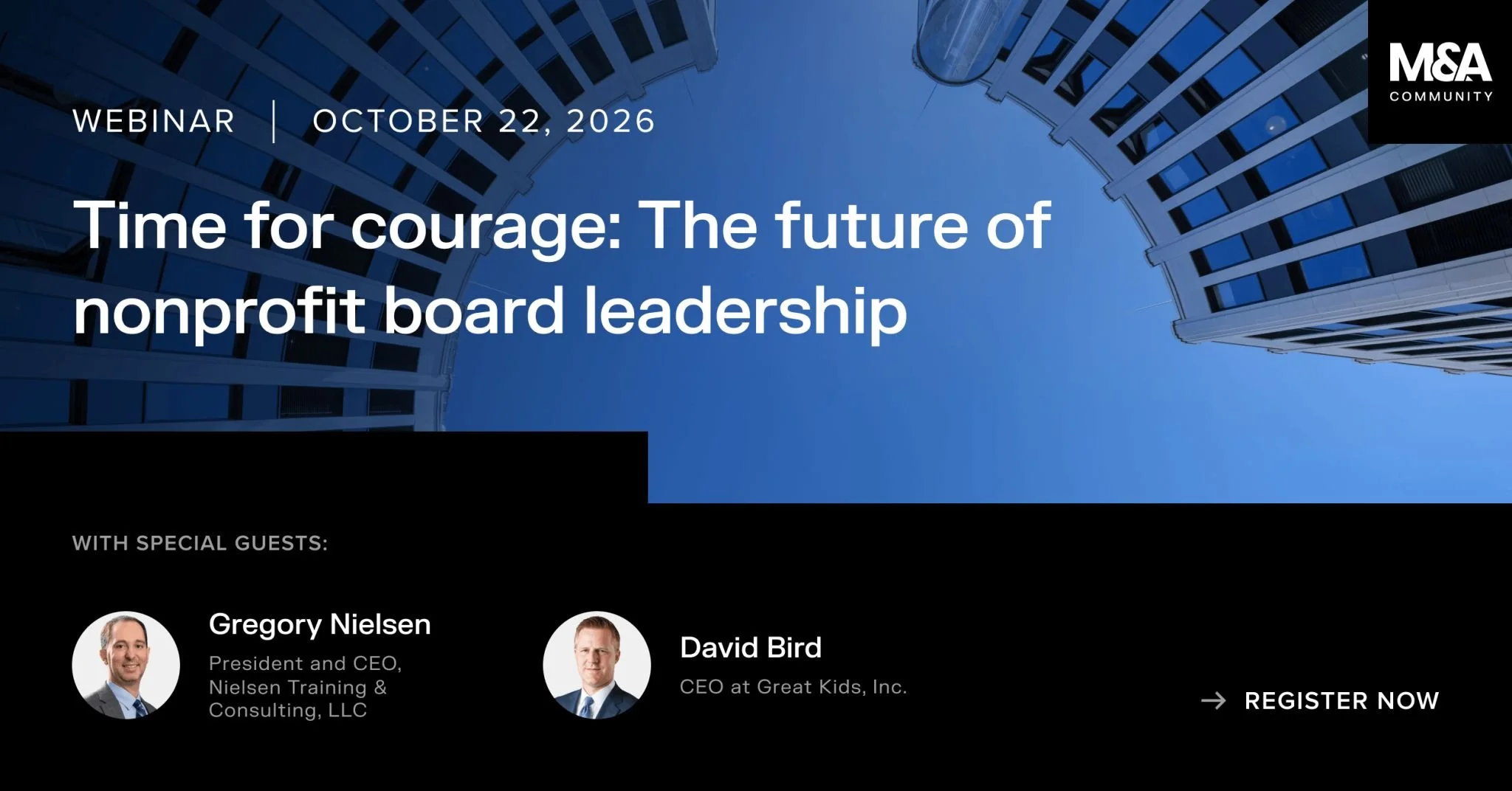
What does it actually take for a nonprofit board to stop just protecting the organization from risk, and start helping it find opportunity? This shift touches everything: how boards spend their meeting time, who gets recruited to sit around the table, how much flexibility board service actually allows, and what the board-CEO relationship needs to become.
I recently joined my friend and colleague David Bird, CEO of Great Kids Inc., for a 60 minute webinar sponsored by Ideals Board and M&A Community. We unpack what this shift looks like in practice, including foresight and AI in the boardroom, board composition, and more. Click below to access the on-demand version of the webinar free.
Board Champions 201
Evansville, Indiana is home to some truly outstanding nonprofit leaders, Board members, and organizations. They also have a tremendous partner in Welborn Foundation that understands the value of healthy governance and supports it. I thoroughly enjoyed spending the day in Evansville last week leading our Board Champions 201 program. This is my 7th consecutive year partnering with the Welborn Foundation with our Board governance and leadership programs. I always leave inspired by the conversations we have and the desire of these leaders to reflect healthy governance and impact in their organizations.
Great Kids Inc Board Retreat: Strategic Visioning
Strategic visioning isn’t about predicting the future. It’s about being intentional about the future you want to create—and making the choices today that move you closer to it.
I recently had the opportunity to facilitate a strategic visioning retreat with the Board and senior leadership team of Great Kids Inc.
The focus? Stepping back from the day-to-day to ask some important questions:
🔹 What future are we working toward?
🔹 What will it take to get there?
🔹 How do we ensure our Board and leadership team are aligned around the path forward?
When was the last time your Board made space to think beyond the next meeting?
National Association of Nurse Practitioners in Women’s Health (NPWH) Selects Its Next CEO

I’m pleased to share some exciting news: Debbie Mason has been selected as the next CEO of the National Association of Nurse Practitioners in Women’s Health (NPWH).
At Nielsen Training & Consulting, we had the privilege of leading this national search. I’m proud of the work we accomplished in partnership with the Board of Directors and grateful for the opportunity to support an organization whose mission and leadership have such an important impact on women’s health.
Debbie brings decades of executive leadership experience across nonprofit, association, and healthcare organizations. Her selection comes at an important moment for NPWH. As the organization approaches its 50th anniversary in 2030, it has an ambitious vision to become the nation’s leading authority and professional home for women’s health nurse practitioners. Its strategic priorities include advancing and protecting the WHNP profession, equipping clinicians for excellence in practice, and building the future women’s health workforce.
I’m excited to see Debbie lead NPWH into this next chapter and help turn that vision into action.
“Greg did an outstanding job leading our national search for our next CEO. He brought a thoughtful, strategic, and highly professional approach to the process, ensuring that we were presented with a strong and diverse pool of highly qualified candidates. His responsiveness, attention to detail, and ability to understand our organization’s unique needs made the search process seamless and productive. We are extremely grateful for Greg’s expertise and leadership, and I would highly recommend him to any organization seeking a trusted partner for an executive search.”
Dr. Jessica Wells, PhD, NPWH Board Chair
I’m grateful to Dr. Wells and the entire NPWH Board for their trust and partnership throughout this process.
Executive search is about much more than filling a position. It’s about helping an organization clarify its leadership needs, engage stakeholders, evaluate candidates thoughtfully, and select the right person to advance its mission. When done well, the process creates an important foundation for the organization’s next chapter.
Congratulations to Debbie Mason and the entire NPWH community! I look forward to seeing what you accomplish together.
If your organization is preparing for a leadership transition or considering its next executive search, I’d welcome a conversation.
CASA of Lexington Board Retreat
Great to be back with CASA of Lexington for my 8th consecutive year facilitating their annual Board retreat!
An annual Board retreat is more than a day away from the regular meeting schedule. It’s an opportunity to step back, reflect on progress, strengthen relationships, and get aligned around the priorities that will move the organization forward.
Healthy Boards make time to work on the organization, not just in it. I’m grateful to partner with CASA of Lexington as they continue investing in strong governance and their mission of advocating for children who need a voice.
Feed Louisville Strategic Planning

I had the opportunity to facilitate a strategic planning retreat with the Board of Feed Louisville, focused on Board development and strengthening their collective leadership.
Feed Louisville is a chef-led community food hub relieving hunger, reducing food waste, strengthening food access, and creating economic opportunity. Advancing that mission requires a strong, engaged, and continually evolving Board.
We used the NTC Board Champions Board Assessment to reflect on the Board’s current strengths, opportunities, and priorities. Boards benefit from setting goals for their own development just as organizations set priorities for achieving their mission. Grateful for the thoughtful conversation, honest reflection, and commitment of the Feed Louisville Board to strengthening their impact.
Before You Post the Job: The Conversations That Shape a Successful Executive Search

I’ve been involved in nonprofit executive searches from a few different perspectives. I’ve sat in the CEO’s chair. I’ve worked with boards. And today, through Nielsen Training and Consulting, I have the opportunity to help organizations navigate one of the most important decisions a board will ever make: selecting its next executive leader.
One thing has become pretty clear to me: The executive search doesn't begin when you post the job. In fact, posting the job may be one of the least important things you do at the beginning of the process. The real work starts with a few honest conversations.
What Does Your Organization Actually Need?
When a CEO leaves, it is natural for a board to start thinking about the person who will replace them. I encourage boards to pause before they start looking at candidates. Instead, ask: What does our organization need from its next leader?
Maybe the organization is ready for growth. Maybe it needs to stabilize after a difficult period. Maybe the board wants to strengthen fundraising, build a stronger staff culture, execute a new strategic plan, or position the organization for a significant change in the years ahead. Maybe the answer is simply that the organization needs continuity and a steady hand.
Every organization is different. And the answer can change depending on where the organization is in its lifecycle. That's why I don't believe in starting an executive search with a generic CEO job description. Start with the leadership challenge. Then build the search around that.
Get the Board Aligned
I've also seen how quickly an executive search can become complicated when board members have different ideas about what they are looking for.
One board member wants a visionary. Another wants a strong operator. Someone else thinks fundraising experience is the most important qualification. Another person is focused on organizational culture.
All of those perspectives can be legitimate. The problem comes when the board hasn't had the conversation about which of those things matter most for this organization, at this particular moment.
Before interviewing candidates, the board should be able to answer some basic questions together:
Where are we today?
Where are we trying to go?
What are our biggest opportunities?
What challenges will our next CEO need to address?
What should this person accomplish in the first 12–18 months?
What leadership characteristics are essential?
What are we unwilling to compromise on?
That doesn't mean every board member will agree on everything. It does mean the board should enter the search with a shared understanding of what it is trying to accomplish.
Is the Organization Ready?
There is another question I think boards should ask—and sometimes don't:
Are we ready for the leader we're asking for?
It sounds simple, but it can be an important question. A board may say it wants a CEO who will challenge the status quo, make difficult decisions, hold people accountable, and lead significant change. But is the board prepared to give that person the authority to lead? Are the roles of the board and CEO clear? Are expectations clear? Does the board communicate effectively with the CEO? Is there trust? Does the organization have a realistic understanding of its current culture, capacity, finances, and strategic priorities?
A great CEO isn't a magic wand. The right leader can accomplish a tremendous amount, but they still need a board that understands its role and an organization that is ready to move forward. Sometimes, the most valuable thing an executive search does is reveal some of this work that needs to happen.
Don't Just Replace the Last CEO
One of the easiest traps in a search is trying to recreate the person who just left. If the previous CEO was a great fundraiser, we want another great fundraiser. If they were highly relational, we want someone highly relational. If they were entrepreneurial, we want another entrepreneur.
But your organization isn't exactly where it was when that person was hired. Your strategy may be different. Your staff may be different. Your community may be different. The challenges facing your organization may be different. So rather than asking, “Who can replace our last CEO?” I think the better question is:
“What kind of leadership does our organization need for what comes next?”
That's a very different question. And it can lead to a very different search.
Slow Down to Move Forward
I know there can be tremendous pressure to move quickly when a CEO position is vacant. Boards worry about staff. Donors may have questions. Programs need to continue. Everyone wants certainty. But spending a little more time at the front end of the process isn't necessarily slowing the search down. It may be the best way to make sure you're headed in the right direction.
Before you write the position description, get aligned. Before you interview candidates, define success. Before you evaluate candidates, understand the leadership challenge. And before you ask someone to lead the organization, make sure the board is ready to be the kind of partner that leader needs.
The best executive searches aren't simply about finding a qualified person. They're about getting clear—really clear—about where the organization is going and what kind of leadership will help it get there. That's why, in my view, the executive search starts long before you post the job.
Before You Post, Start the Conversation
If your nonprofit is preparing for an executive transition—or you know one may be coming—don't start with the job posting. Start with the questions.
At Nielsen Training and Consulting, we help nonprofit boards clarify their leadership needs, build alignment, and approach executive search with intention.
If your board is facing an upcoming leadership transition, let's have a conversation before you begin the search. A thoughtful conversation today can make a significant difference in the leader you find tomorrow.
Scenario Planning with Panora Fiber
It was a pleasure facilitating a retreat with the Board and senior leadership team of Panora Fiber focused on scenario planning and preparing for the future.
I was especially impressed by this company—not only by its commitment to providing outstanding service to its customers, but also by the genuine commitment to serving and strengthening its community.
Great organizations don’t simply plan for the future. They create the capacity to navigate uncertainty, recognize opportunities, and continue delivering on their mission.
Thank you to the Panora Fiber team for a thoughtful and engaging day!
Youth First Board Retreat
One of my favorite parts of this work is getting to spend time with nonprofit Boards who are genuinely willing to learn, stretch, and get better together.
I had the opportunity to facilitate a Board retreat with the Board of Youth First in Evansville, Indiana, and it was a really meaningful day.
We spent time talking about the habits and practices of healthy governance, but we also tackled something that can be uncomfortable for many Board members: fundraising and advocacy.
And rather than simply talking about fundraising, we practiced it.
We worked through some real-world Board fundraising scenarios through facilitated role play—giving Board members a chance to try, stumble, laugh, learn, and build confidence in having conversations that can sometimes feel awkward.
That’s the kind of learning I love: practical, honest, and immediately useful.
Youth First’s mission makes this work especially meaningful. They are transforming and strengthening the lives of young people and their families by bringing Youth First Mental Health Professionals into area schools and providing prevention and behavioral health programs—free of charge and right where kids and families need them.
I left the retreat reminded once again that healthy Boards don’t happen by accident. They are built through intentional conversations, shared expectations, trust, practice, and a willingness to keep getting better.
Thank you to the Youth First Board for the energy, openness, and good humor you brought to the day. It was a privilege to spend time with you!
Board Champions 101
Board leadership matters. And great board leadership takes practice.
I had the opportunity to facilitate Board Champions 101 with an incredible group of nonprofit executives and Board members from across the Evansville, Indiana region.
The discussion was highly interactive, candid, and focused on the real-world challenges—and opportunities—of building stronger, healthier, more effective boards. From clarifying roles to strengthening engagement, we explored practical ways Board members can become true champions for their organizations and missions.
A big thank you to the Welborn Foundation for sponsoring this important conversation and investing in nonprofit leadership across the region.
Great boards don’t happen by accident. They’re built intentionally.
The Future of Board Leadership
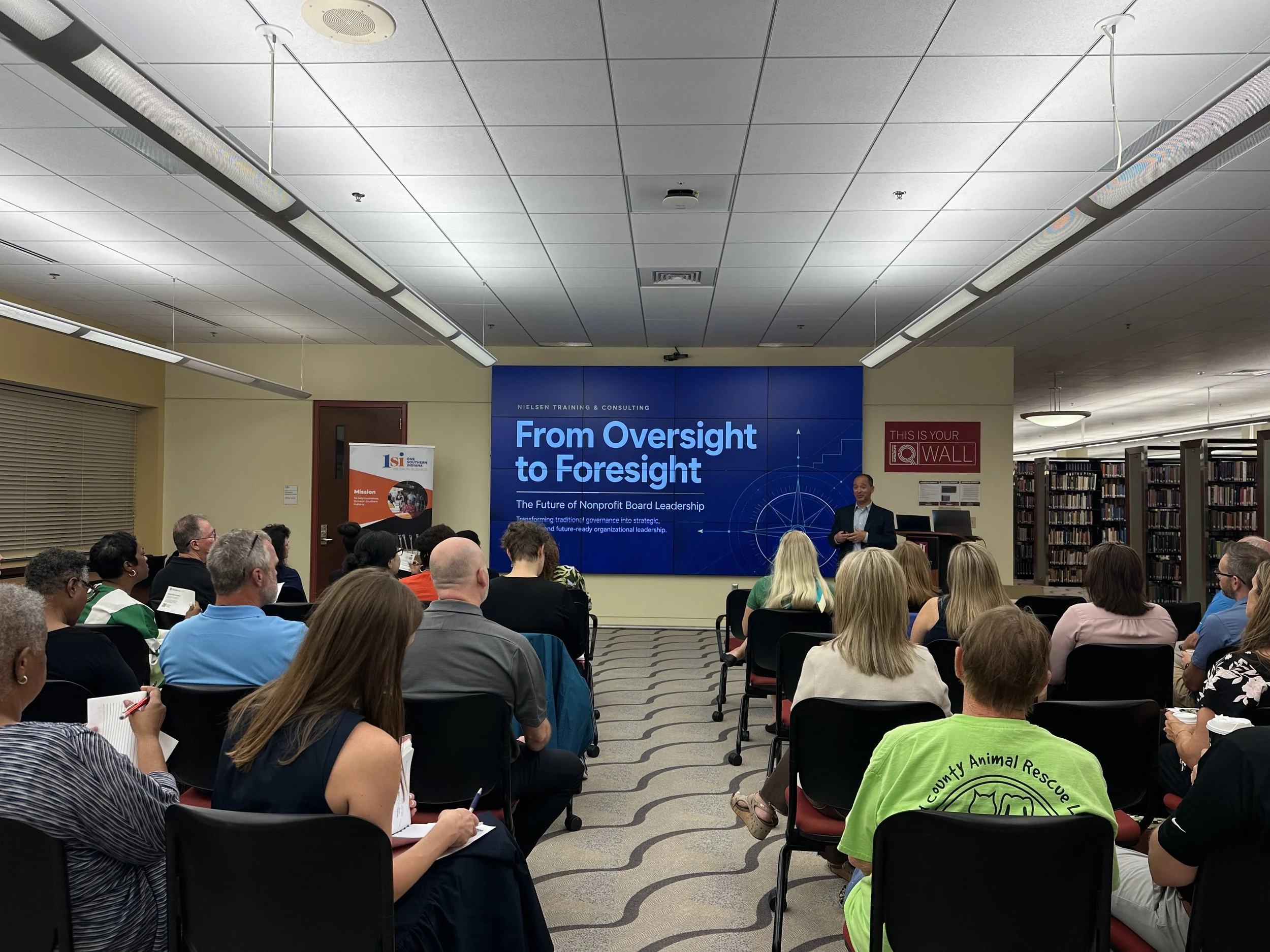
What does the future of Board leadership look like?
I had the opportunity to lead an engaging discussion, “From Oversight to Foresight: The Future of Board Leadership,” sponsored by One Southern Indiana Chamber of Commerce and Economic Development.
We explored what it takes for nonprofit Boards to move beyond simply overseeing today’s organization and begin thinking more intentionally about what’s next—anticipating change, asking better questions, challenging assumptions, and positioning the organization for the future.
The conversation sparked some exciting ideas about the evolution of Board governance—and how Boards can become more strategic, curious, courageous, and future-focused.
The best Boards don’t just govern for today. They help their organizations prepare for tomorrow.
Executive Evaluation That Builds Trust and Drives Results

When nonprofit boards discuss their governance responsibilities, they often focus on strategic planning, financial oversight, fundraising, and board recruitment. Yet one of the most important responsibilities of a board is sometimes the one that receives the least attention: supporting and evaluating the executive director or chief executive.
Unfortunately, many executive evaluations become annual administrative exercises that are rushed, uncomfortable, or disconnected from the organization's priorities. When done well, however, executive evaluation is much more than a performance review. It is an opportunity to strengthen trust, improve communication, reinforce accountability, and align leadership efforts with the organization's strategic goals.
At its core, the purpose of executive evaluation is development—not documentation.
Start With Strategy and Process
The most effective executive evaluations begin with clear expectations tied directly to the organization's strategy.
Too often, boards evaluate executives based on general impressions, recent events, or anecdotal feedback. Instead, performance should be measured against agreed-upon goals that support the organization's strategic plan, financial sustainability, fundraising priorities, and leadership expectations.
When evaluation criteria are aligned with organizational goals, the conversation becomes more objective and meaningful. The board and executive can focus on progress, challenges, and future priorities rather than personal opinions.
A healthy executive evaluation process follows a consistent framework. Conduct periodic check-ins throughout the year rather than waiting for an annual review. Gather input from both the board and the executive, hold a thoughtful evaluation discussion, and then establish future goals and development priorities.
Consistency builds fairness, transparency, and credibility while ensuring that expectations remain clear.
Avoid Common Evaluation Mistakes
Several common mistakes can undermine an otherwise well-intentioned evaluation process.
One of the most frequent is focusing only on recent events. An executive's performance should be evaluated across the entire review period, not just the last few months.
Another mistake is evaluating personality rather than performance. Boards should assess results, leadership behaviors, and organizational impact—not whether they personally prefer a particular leadership style.
Perhaps the most damaging mistake is surprising the executive during the evaluation meeting. Feedback should occur throughout the year so that the formal evaluation reflects an ongoing conversation rather than introducing concerns for the first time.
Boards also miss opportunities when they fail to connect the evaluation to strategic priorities or neglect to follow up on agreed-upon goals.
Include Executive Self-Assessment
One of the most valuable components of an executive evaluation is often the executive's own self-assessment.
Self-assessments encourage reflection, highlight accomplishments, identify challenges, and surface professional development needs. They also provide context that board members may not otherwise have.
Rather than viewing the evaluation as something being done to the executive, self-assessment helps create a collaborative discussion about leadership, organizational performance, and future success.
Consider the Value of an External Facilitator
Many organizations find that an external facilitator adds significant value to the executive evaluation process.
An experienced facilitator can help design the process, gather confidential feedback, identify common themes, and keep discussions focused on organizational priorities rather than individual opinions. Facilitators also bring objectivity and can help navigate sensitive conversations in a constructive manner.
Perhaps most importantly, an external facilitator can help boards reflect on their own effectiveness. Executive performance is often influenced by board leadership, communication, expectations, and support. A facilitator can help ensure the evaluation becomes a meaningful discussion about organizational success rather than simply a review of one individual's performance.
Remember: Evaluation Is a Two-Way Responsibility
One of the most overlooked truths about executive performance is that it is often influenced by board effectiveness.
While the executive leads day-to-day operations, the board establishes direction, provides resources, removes barriers, and offers both support and accountability.
As boards evaluate executive performance, they should also ask themselves:
Have we provided clear expectations?
Have we approved realistic goals?
Have we supplied sufficient resources?
Have we been effective partners?
These questions remind us that executive success is often a shared responsibility.
Make the Evaluation Meeting a Conversation
The evaluation meeting should not feel like a report card presentation.
Instead, it should be a conversation that strengthens partnership and builds alignment. Begin by discussing accomplishments and progress toward goals. Address challenges honestly and constructively. Explore future opportunities, development needs, and organizational priorities.
When handled thoughtfully, the evaluation process strengthens the relationship between the board and executive while positioning the organization for future success.
The Bottom Line
Healthy governance requires ongoing dialogue.
Executive evaluation should not be viewed as a once-a-year event but as part of a continuous process of communication, feedback, and partnership. When boards connect evaluation to strategy, provide regular feedback, incorporate self-reflection, and focus on development, they create a process that benefits both the executive and the organization.
Ultimately, the best executive evaluations do more than assess performance—they strengthen leadership, improve governance, and help advance the mission that everyone is working to achieve.
If your Board is ready to embrace its future, reach out to Nielsen Training and Consulting. Whether it is a conference presentation, an engaging Board retreat, or an impactful keynote, let’s equip your Board to succeed now and in the future.
Hearing Loss Association of America (HLAA) Board Retreat
Last week, I facilitated a thoughtful and engaging conversation with the Board of the Hearing Loss Association of America focused on the future of board leadership.
Together, we explored what it takes to build and sustain healthy boards in a rapidly changing environment—examining the critical roles of trust, healthy board culture, strong relationships, accountability, and leadership succession. The discussion highlighted how intentional governance practices create the foundation for boards to lead with confidence, adaptability, and impact.
HLAA is the nation’s leading organization representing people with hearing loss, providing support, education, advocacy, and resources to help individuals and their families live successfully with hearing loss.
The future of board leadership is built on trust, shared purpose, and a culture where every voice is heard.
CASA of Rock County Board Retreat
This week, I facilitated a Board and staff retreat with CASA of Rock County in Wisconsin. Together, we explored Board Champions: Habits and Practices of Healthy Boards, engaging in meaningful discussions about governance excellence, board culture, accountability, and the behaviors that help organizations thrive. We also spent time focused on strategic planning, identifying priorities and opportunities to strengthen the organization's impact in the years ahead.
CASA of Rock County's mission is to recruit, train, and support community volunteers who advocate for the best interests of children who have experienced abuse or neglect, ensuring that every child's voice is heard.
Governance and Strategy With San Diego Botanic Garden

There’s something powerful about connecting how a board governs with where an organization is going.
One of the most impactful moves in strategic planning is integrating a Board Self-Assessment into the process. It grounds the strategy in reality—clarifying strengths, surfacing gaps, and ensuring the board is truly equipped to steward the vision ahead. Strategy doesn’t just live on paper—it lives through governance.
Grateful for the opportunity to facilitate a two-day leadership retreat with San Diego Botanic Garden, where we brought together board governance and strategic planning in a meaningful, integrated way. The conversations were thoughtful, candid, and forward-looking—exactly what strong governance requires.
And the setting? Absolutely stunning. The Garden itself is a reminder of what intentional cultivation can create over time. If you haven’t visited, it’s well worth experiencing.
Empowering CASA Boards to Lead, Give, and Plan Forward
Last week was a powerful reminder of the impact strong boards can have on mission-driven work.
I had the privilege of facilitating two Board retreats with incredible CASA programs here in Kentucky:
With CASA of the Lincoln Trail, we focused on the Board’s role in fundraising and philanthropy—leaning into what it truly means for board members to be champions of the mission, not just stewards of it.
With CASA of Graves County & Southwest Kentucky, the conversation centered on strategic planning—aligning vision, priorities, and action to better serve children and families in their communities.
I’m continually grateful for the opportunity to work alongside CASA programs—both here in Kentucky and across the country—supporting Boards as they strengthen their leadership, clarify their roles, and expand their impact where it matters most.
San Diego Botanic Garden


This week I had the privilege of facilitating focus groups with the dedicated staff and volunteers of the beautiful San Diego Botanic Garden as part of their strategic planning process.
One of the most important—and often most impactful—parts of thoughtful strategic planning is creating space to listen. Gathering input from a wide range of internal and external stakeholders brings forward perspectives that leadership alone can’t see, surfaces both opportunities and blind spots, and builds shared ownership in the path ahead. When people feel heard, plans become stronger, more grounded, and far more likely to succeed.
I’m grateful to the San Diego Botanic Garden team for their openness, insight, and deep commitment to mission as they think intentionally about the future.
CASA of the Ohio Valley Board Retreat
Grateful for the opportunity to spend time with the Board and leadership of CASA of the Ohio Valley during a strategy retreat focused on what matters most: children. Court Appointed Special Advocates play a critical role in giving vulnerable kids a voice when they need it most, and this team’s passion and purpose truly stood out. Their work is mission-critical, and it was a privilege to support their strategic focus on impact and sustainability.
Welcoming Mackenzee McKittrick as Alley Cat Advocates’ next Executive Director
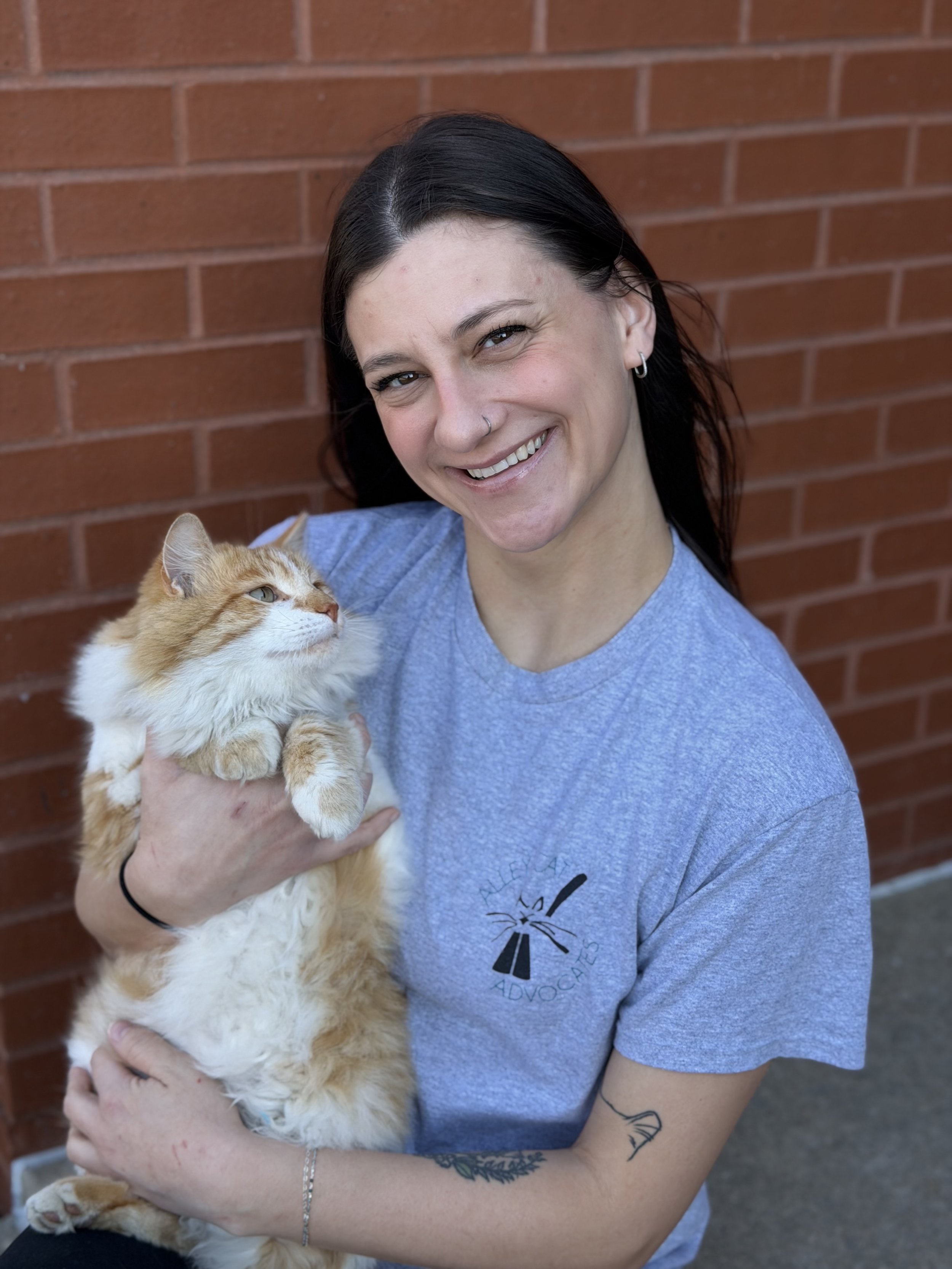
After a thoughtful and comprehensive executive search facilitated by Nielsen Training and Consulting, the Alley Cat Advocates Board of Directors is thrilled to announce the selection of Mackenzee McKittrick as its next Executive Director.
Mackenzee begins her tenure in this role on February 16, 2026. She will succeed Alley Cat Advocates’ visionary co-founder and Executive Director Karen Little who is retiring.
Mackenzee brings nearly 13 years of feline-focused animal welfare experience, including hands-on leadership in community cat programming and municipal policy development. She most recently served as Event and Outreach Coordinator at Vanderburgh Humane Society, in Evansville, Indiana, where she led the Community Cat Program and achieved significant, measurable results, including:
A 32% decrease in cat euthanasia at local Animal Control
231 fewer cat intakes at the Humane Society compared to the prior year
Her expertise in community partnerships, program development, and fundraising has made a lasting impact on the lives of countless cats and the communities she serves.
Leadership Quotes:
“I'm very excited about the experience, energy, and passion Mackenzee will bring to Alley Cat Advocates as our new Executive Director. The Board and I are all committed to partnering closely with her during the transition and cannot wait to see how the organization will grow under her leadership.”
Aaron Jessie, Board Chair
“I could not be more pleased to have Mackenzee McKittrick accept the position of Alley Cat Advocates' new Executive Director. She brings both a passion for the mission and a strong set of skills, the combination of which will help Alley Cat Advocates thrive for many years to come,”
Karen Little, Alley Cat Advocates’ retiring Executive Director
“It is a great privilege to step into the role of executive director of Alley Cat Advocates. After years of following ACA as a leader in community cat programming, I am excited to apply my skills and passion to continue making Louisville the safest city in the country for community cats. Alley Cat Advocates has been a cornerstone for gold standard care of unowned cats, and I am thrilled to continue Karen's legacy.”
Mackenzee McKittrick, Incoming Executive Director
Please join us in welcoming Mackenzee to her new role!
Board Transitions Done Well

Board transitions are one of the most overlooked—and most important—moments in a nonprofit’s life. Whether you are welcoming new board members or saying goodbye to longtime leaders, how you manage these transitions sends a powerful signal about your culture, your governance maturity, and your respect for volunteer leadership.
The good news? With a little intention, board transitions can strengthen—not disrupt—your organization.
Bringing New Board Members On: Start with Clarity, Not Paperwork
Too many nonprofits confuse “orientation” with handing someone a thick binder and hoping for the best. Effective onboarding is less about information overload and more about context, relationships, and expectations.
New board members should quickly understand three things: why the organization exists, how the board adds value, and what is expected of them individually. That means going beyond bylaws and financials. Pair new members with a board mentor. Schedule time with the board chair and executive director. Explain how decisions actually get made—not just how they’re supposed to. The Board team is led and managed by Board leaders and these leaders should take an active role in structuring the onboarding process of their new teammates.
Just as important, create space for new voices early. Ask new members what drew them to the organization and what perspective they bring. When people feel heard from the start, they engage more fully and faster.
Supporting Early Success: The First Year Matters
The first year of board service often determines whether a member becomes deeply engaged or quietly disengaged. Smart boards set clear expectations around attendance, committee service, fundraising, and ambassadorship—and then reinforce those expectations through regular check-ins and accountability.
Annual goals for board members, even informal ones, can be incredibly helpful. So can brief, periodic evaluations that focus on learning and improvement rather than compliance. Remember, good governance is a team sport.
Transitioning Board Members Off: End Well, Not Abruptly
Board service should end as thoughtfully as it begins. Too often, board members rotate off with little acknowledgment, minimal reflection, and no structured handoff. That’s a missed opportunity.
A strong offboarding process includes a few key elements: gratitude, knowledge transfer, and continued connection. Thank departing members publicly and specifically for their contributions. Invite them to share insights about what worked, what didn’t, and what the board should pay attention to next.
Some organizations conduct brief exit conversations or surveys. Others invite outgoing members to remain involved as ambassadors, advisors, or donors. Ending well preserves relationships and reinforces a culture of respect.
Why It All Matters
Board transitions aren’t administrative tasks—they’re governance moments. They shape how power is shared, how trust is built, and how leadership evolves. When nonprofits handle transitions with care, they send a clear message: this organization values people, plans ahead, and takes stewardship seriously.
And in a sector built on mission and trust, that message matters more than ever.